Client
Washington D.C. Public Schools
Project description
When Martin Luther King, Jr. was assassinated, the Cardozo neighborhood in Washington D.C. boiled over into violence and fires that lasted for days. In the weeks and months following, the D.C. Public Schools’ experimental Innovation Team invited elementary school students to document their feelings and experiences as a way of processing the pain and destruction around them.
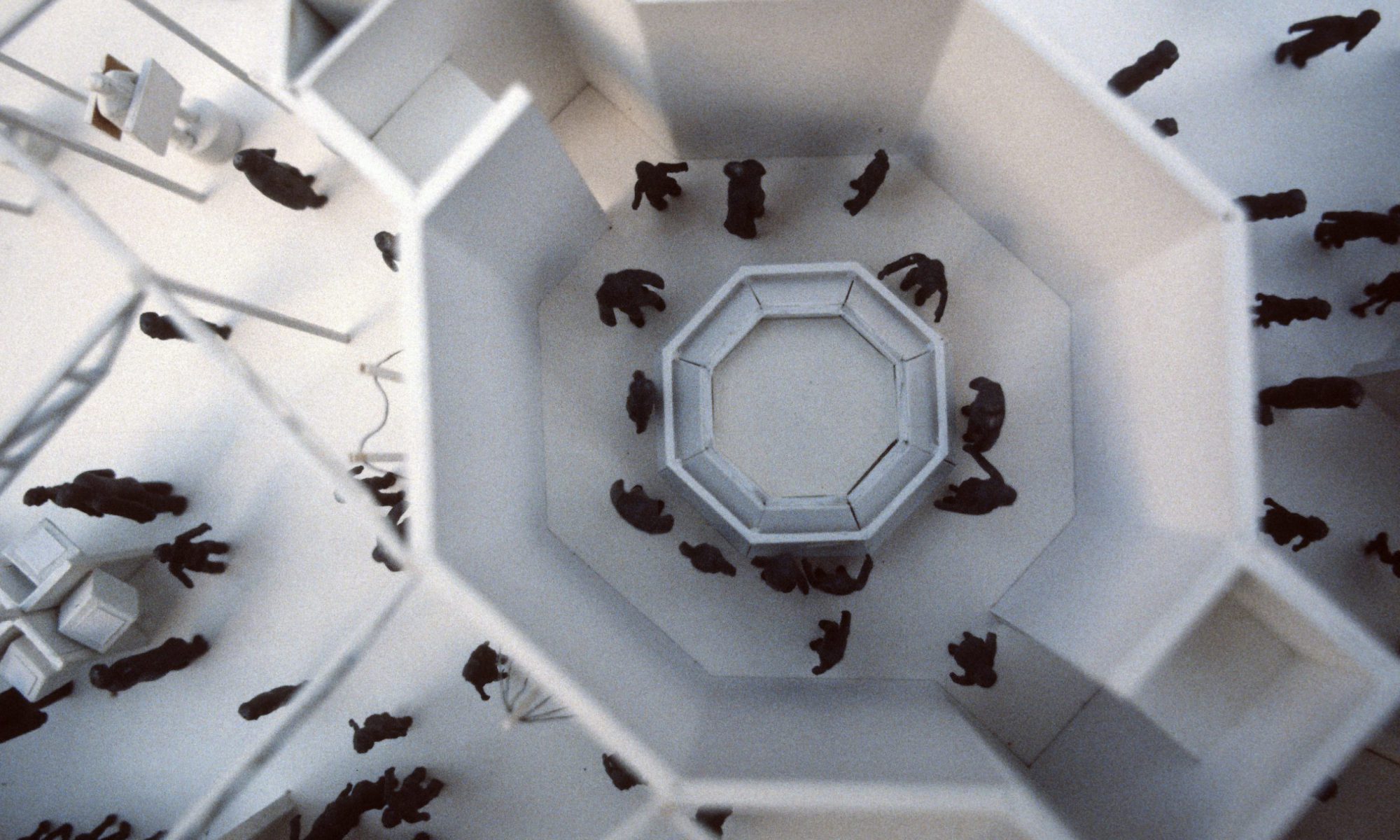
The nonprofit Education Development Center (EDC), a partner in the school program, produced a series of publications and a traveling exhibit for the Smithsonian Institution, centering the children’s experiences in their own words and images. As Art Director of the EDC, Michael oversaw the exhibit design, relying heavily on what he playfully coined his Sand Boxes, lightweight and interchangeable cardboard boxes with artwork and interpretive text mounted directly on their surfaces. He would use the technique for many exhibitions, including an exhibition of Sister Corita Kent’s graphic poster art.
Date
1968
Location
Washington, D.C.
Discipline
Exhibits
Historical context
The 1960s were a seminal time in the history of teaching in the United States. A mere decade from Brown v. Board of Education, public schools had become a key driver of social innovation. By 1968, the Washington DC public schools had begun to run up against the experimental ethos of that decade, with the introduction of programs like the Cardozo Program and the Model School Division (MDS).
“Recognizing the need for reform, the Washington, D. C. Public School System sought to initiate change by setting up a Model School Division (MSD),” states a dissertation exploring the MSD experiment. “This act designed to initiate and foster change in the D.C. schools, led to the creation of the Innovation Team as a vehicle for system change…
“The experiences of the Innovation Team pointed out the need for indigenous mentors or agents, as initiators of change, in an urban public school system. Members of the group, as well as the leader, were employees of the Washington, D.C. school system. The Team had a common bond of classroom experiences, ethnic identity and educational ideology.”
When Martin Luther King, Jr. was assassinated, the Cardozo neighborhood in Washington D.C. boiled over into riots, violence, and fires that lasted for days. It would take decades for the neighborhood to recover, but in the immediate weeks and months that followed, the Innovation Team went to work.
Working with local teachers, the team invited elementary school students to document their feelings and experiences. The nonprofit Education Development Center (EDC), a partner in the school program, produced a series of publications and a traveling exhibit for the Smithsonian Institution that kicked off its tour from the National Mall. As Design Director of the EDC, Michael oversaw the exhibit design, evidenced in the use of what he playfully coined his Sand Boxes (he would use the technique for many exhibitions, including an exhibition of Sister Corita Kent’s graphic poster art).
“Children witnessed the rioting, and the experience was rather devastating. We just couldn’t leave it alone,” said Anne W. Pitts, an Innovation teacher at the time. “This was a catharsis, to get it out of the system.” (From D.C.’s Riots Through the Eyes of Children)
There are additional related projects in the archives that we have yet to identify (and at least one known project: Cardozo Raps, a collection of poetry, spoken word, and art).
Further reading:
- D.C.’s Riots Through the Eyes of Children
A 1988 Washington Post article about the publication accompanying the exhibit. - The Night MLK Died, Washington Burned
A detailed account of the riots from historian J. Samuel Walker, who wrote a book about the events. - Systems renewal in education: a case study of the Washington, D.C. innovation team (PDF)
A 1973 dissertation about the program by Irvin D. Gordy, a Team Leader on the original Innovation Team. - 50 Years After DC Burned, the Injustices That Caused the Riots Are as Urgent as Ever
A reflection on the contemporary contexts of the riots and their aftermath